

How can intersectional feminist and queer modes of curating disrupt traditional heteronormative and patriarchal structures within the museum?
This essay was originally written in 2023 and has been revised in 2026 for publication.
* A note on bell hooks: bell hooks intentionally styled her name in lowercase throughout her life and work. This essay respects that choice.
The museum has always been a political space. Its walls do not simply display culture. They construct it, deciding whose stories are told, whose bodies are centred, and whose histories are deemed worth preserving. For as long as institutions have existed, feminism and queerness have existed in tension with them, pushing against the architecture of power that the white cube was built to protect. The question is no longer whether the museum needs to change. It is whether it is capable of changing from within, and what happens when curators stop asking for permission and start dismantling the walls themselves.
Some people already have a seat at the table. Historically, others have had to fight for one. It does not take long to learn that women artists are often inserted chronologically into art history in an attempt to challenge its erasures. Learning about Lee Krasner next to Jackson Pollock, or Frida Kahlo alongside Diego Rivera, is not feminist. It is tokenism with better lighting. Linda Nochlin's 1971 essay Why Have There Been No Great Women Artists remains as urgent as ever in reminding us that the absence of women from art history is not a question of talent but of access. As Nochlin argued, the reason was quite plainly that women did not have the good fortune to be born white, preferably middle class and, above all, male.¹ The walls were built before they arrived.
To consider how curating can genuinely disrupt these structures, we must first understand what we mean by feminism. bell hooks* offers the clearest foundation: feminism is a movement to end sexism, sexist exploitation, and oppression.² Crucially, hooks was also at the forefront of intersectionality, insisting on the necessity of considering race, sexuality, gender and class within any analysis of power. A feminism that does not account for these intersections is not feminism. It is the prioritisation of one kind of body over others, dressed up in progressive language.
ACCA's 2017 exhibition Unfinished Business: Perspectives on Art and Feminism took this seriously. Rather than a single curatorial voice, the show was built collaboratively. Director Max Delany and Senior Curator Annika Kristensen worked alongside Paola Balla, Julie Ewington, Vikki McInnes and Elvis Richardson. The plurality was intentional and structural. Balla, a Wemba-Wemba and Gunditjmara artist, curator and academic, grounded the show in an Australian context that refused to separate gender from race. As she wrote in the catalogue, gender does not trump race in Australia. It never has.³ The curatorial team made a conscious effort to incorporate gender-diverse artists, Indigenous artists, artists of colour and cross-generational perspectives. The word that recurred across their writings about the show was polyphonic. It was a considered choice. The show did not attempt to define feminism. It opened it up.⁴
Walking through ACCA's four gallery spaces, the presentation resisted linearity. The architecture helped. The gallery did not end at a wall but looped back into the foyer, allowing visitors to re-enter the first space. It became cyclic rather than conclusive. The works, spanning video, painting, weaving, text, archival material and sculpture, bled into each other across generations and themes. This was feminist thinking made spatial.
One of the most quietly powerful works in the exhibition was the collaboration between Emily Floyd and Mary Featherston, The Round Table, commissioned specifically for the show. On first encounter, it almost resembled an oversized children's toy. But its logic was precise. Its foundation was circular, encompassing eight smaller full circles, a crescent and a semicircle. The stools and benches were all the same height, establishing a horizontal plane where no single position held authority. The work was based on a diagram by Featherston from a 1977 community childcare newsletter, its arrows pointing both inward and outward, tracing a non-linear flow of ideas.⁵ At the centre of a gallery, it became a meeting place. A traditional table allows for one body at its head. A round table refuses that arrangement entirely.
The intergenerational dimension of the work matters. Floyd, born in 1972, is connected to Featherston not only intellectually but personally. Floyd's mother was involved in the same radical childcare movement that shaped Featherston's practice.⁶ Their collaboration across decades demonstrates that feminist thinking is not confined to a single generation or a single way of knowing. As Sara Ahmed writes, becoming a feminist involves coming up against the world.⁷ The Round Table made that coming up against visible, and survivable, together.
Intersectional feminist perspectives and queer methodology do not sit apart from each other. They overlap, converge and collectively chip away at the same institutional walls. To consider a queer curatorial methodology is to consider what Ahmed describes as walls that are not encountered by everybody. They are only obstacles for those who are actively embodying what goes against the norm.⁸ For queer people, those walls are structural, social and often invisible to those who do not have to navigate them.
Zara Sully's exhibition On Screen, In the Flesh, presented at Trocadero Art Space as part of Midsumma 2021, offered a queer curatorial model worth returning to. Using Jonathan Katz and Änne Söll's definition, queerness is understood here as a term that sets out to question normative, and especially heteronormative, systems and relations within society.⁹ The show brought together twelve artists with different bodies and perspectives within an artist-run space, a context that matters. Smaller institutions face fewer stakeholders and are often better placed to take genuine risks. As Maura Reilly has noted, museums have historically struggled with how to acknowledge non-heteronormative sexualities.¹⁰ The artist-run initiative does not have to negotiate those same hesitations.
On Screen, In the Flesh also acknowledged the internet as a queer space, a meeting point where many young queer people first encounter identities beyond the heteronormative. The show's online presence extended its life beyond the gallery walls, creating a lasting record of voices from the margins. Sully's decision to uncloset the show digitally was itself a queer act.¹¹
Within the first gallery space, Emma Berry and Liv Moriarty's untitled installation presented two pine wood ladders leaning against each other, a bench and printed photographs. The ladders were lightweight and held each other up, forming an A-frame. The work diagrammed their collaborative relationship. It spoke to models of kinship not bound by the traditional family, to queer ways of holding and being held.¹² The bench had a DIY quality, seemingly fragile but structurally sound. A metal drain cover embedded within it suggested permeability, a passing back and forth. The work was both horizontal and vertical but refused hierarchy. It relied on the gaps and spaces in between to remain open.
What Unfinished Business and On Screen, In the Flesh ultimately demonstrate is that the most radical curatorial act is not the work on the wall but the conditions created around it. The conversations invited, the bodies welcomed, the hierarchies quietly refused. Feminist and queer curating does not announce itself with manifestos. It works in the arrangement of a round table, in the lean of two ladders holding each other up, in the decision to make a corridor a destination. The institution will not dismantle itself. But in the hands of curators willing to think otherwise, its walls become, slowly, something you can breathe through.
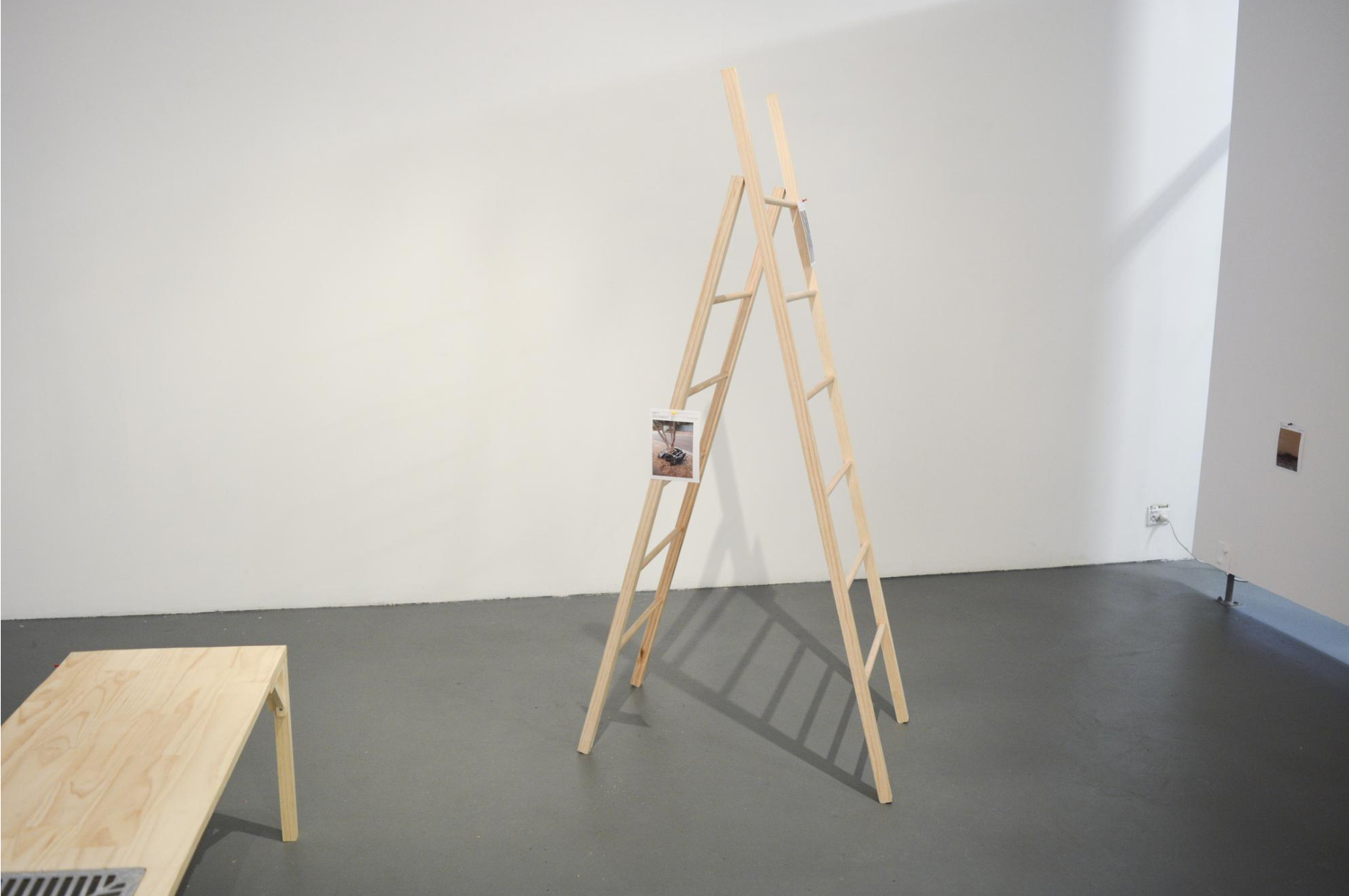
[Figure 1. Emma Berry & Liv Moriarty, untitled, 2021, Installation View. Source: https://emmanicoleberry.com/on-screen,-in-the-flesh]
Footnotes
Linda Nochlin, "Why Have There Been No Great Women Artists," ARTNews, January 1971.
bell hooks, Feminism is for Everybody (Taylor & Francis Group, 2014), xii.
Paola Balla, in Unfinished Business: Perspectives on Art and Feminism (Melbourne: ACCA, 2017), 46. Exhibition catalogue.
Max Delany, in Unfinished Business: Perspectives on Art and Feminism (Melbourne: ACCA, 2017), 16. Exhibition catalogue.
Linda Mickleborough, in Unfinished Business: Perspectives on Art and Feminism (Melbourne: ACCA, 2017), 8. Exhibition catalogue.
ACCA, "Emily Floyd and Mary Featherston, The Round Table 2017," accessed June 2023.
Sara Ahmed, Living a Feminist Life (Durham and London: Duke University Press, 2017), 216.
Ibid, 18.
Jonathan Katz and Änne Söll, "Editorial: Queer Exhibitions/Queer Curating," OnCurating 37, June 2017.
Maura Reilly, "Prising Open the Museum's Closets," in Queer: Stories from the NGV Collection (Melbourne: National Gallery of Victoria, 2022), xviii.
Trocadero Art Space, On Screen, In the Flesh, Midsumma, Melbourne, 2021. Exhibition catalogue.
Ahmed, Living a Feminist Life, 213.
Bibliography
Ahmed, Sara. Living a Feminist Life. Durham and London: Duke University Press, 2017.
Australian Centre for Contemporary Art. Unfinished Business: Perspectives on Art and Feminism. Melbourne: ACCA, 2017. Exhibition catalogue.
hooks, bell. Feminism is for Everybody. London: Taylor & Francis Group, 2014.
Katz, Jonathan and Söll, Änne. "Editorial: Queer Exhibitions/Queer Curating." OnCurating 37, June 2017.
Mickleborough, Linda. Forward in Unfinished Business: Perspectives on Art and Feminism. Melbourne: ACCA, 2017. Exhibition catalogue.
Molesworth, Helen. "How to Install Art as a Feminist." In Women Artists at the Museum of Modern Art, edited by Cornelia Butler and Alexandra Schwartz. New York: Museum of Modern Art, 2010.
Nochlin, Linda. "Why Have There Been No Great Women Artists." ARTNews, January 1971.
Reilly, Maura. "Prising Open the Museum's Closets." In Queer: Stories from the NGV Collection. Melbourne: National Gallery of Victoria, 2022.
Reilly, Maura. "Making Trouble: A Tribute to Linda Nochlin." Artlines: A Publication of the Women's Caucus for Art, Summer 2018.
Sullivan, Nikki and Middleton, Craig. "Introduction." In Queering the Museum. Abingdon and New York: Routledge, 2020.
Trocadero Art Space. On Screen, In the Flesh. Melbourne: Midsumma, 2021. Exhibition catalogue.